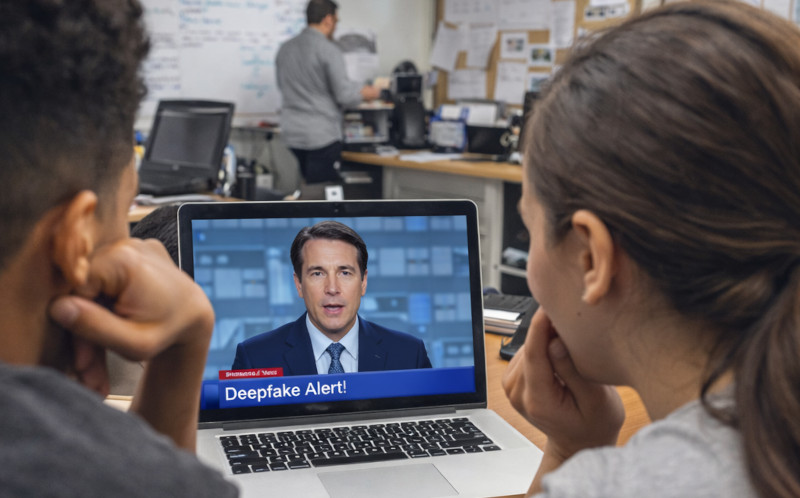
In 2026, social engineering is no longer just about suspicious emails; it involves AI-driven voice cloning and hyper-personalized deepfakes. Defending against these attacks requires a shift from 'looking for errors' to a Zero-Trust verification model.
Key defensive trends include: • Credential Masking: Using email aliases to ensure your 'true' address is never exposed. • Hardware-Backed MFA: Moving to FIDO2/WebAuthn keys that are mathematically immune to phishing sites. • Out-of-Band Verification: Using separate, secure channels (like Signal) to verify 'urgent' requests from family or colleagues.
Related Articles
Phishing
Feb 08, 2026
The Deepfake Dilemma: Social Engineering in the Age of AI Mimicry
By Elena Vance
When you can no longer trust your eyes or ears, the 'Human Element' becomes the weakest link. Explore how generative AI is transforming simple phishing into sophisticated psychological warfare.
The leading open-source phishing framework. It allows organizations and individuals to set up their own simulated phishing campaigns to test awareness without high commercial costs.
An open-source service that creates unique email aliases for every site. If an alias starts receiving phishing mail, you can simply delete it without changing your primary email address.
A transparent, open-source email forwarding service that allows you to create alias-based identities on the fly, preventing your real identity from being harvested by data brokers.
A collaborative clearinghouse where users can submit and verify suspected phishing URLs. It powers the phishing protection filters for many popular browsers.
Incorporates 'Link Confirmation' and advanced spoofing protection. In 2026, its AI-based filters are specifically tuned to detect LLM-generated phishing prose.
A privacy-focused email service that encrypts the entire mailbox, including subject lines and contact metadata, reducing the 'footprint' available to social engineers.
Official government guidance on spotting modern 'vishing' (voice) and 'smishing' (SMS) attacks, which have become more common than email phishing in 2026.