
The Deepfake Dilemma: Social Engineering in the Age of AI Mimicry
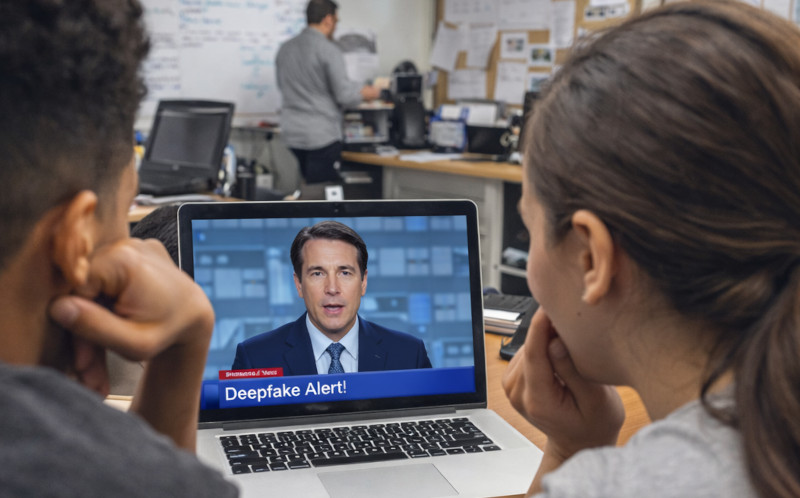
When you can no longer trust your eyes or ears, the 'Human Element' becomes the weakest link. Explore how generative AI is transforming simple phishing into sophisticated psychological warfare.
For decades, social engineering relied on poorly spelled emails and generic lures. In 2026, those days are long gone. The rise of hyper-realistic Deepfake technology has turned identity verification into a battlefield, where attackers can now clone a CEO's voice or a CFO's face in real-time during a live video call.
The 'Human-in-the-Middle' Attack
Traditional phishing focused on stealing credentials; modern social engineering focuses on manipulating intent. We are now seeing 'Human-in-the-Middle' (HitM) attacks where an AI-generated persona intercepts a business process. An employee might receive a video call from their 'manager' requesting an urgent wire transfer, complete with the manager's unique speech patterns, facial tics, and personal anecdotes gathered from social media scraping.
Beyond the Visual: Voice Synthesis
Voice cloning has reached a point of 'zero-shot' perfection. With only three seconds of high-quality audio—easily harvested from a webinar or a LinkedIn video—an attacker can generate a voice model capable of bypassing voice-biometric security systems and convincing even close colleagues of their identity.
Defensive Strategies for 2026
To survive this era of digital mimicry, organizations must move beyond simple awareness training and implement structural safeguards:
- Multi-Channel Verification: Never authorize high-value transactions based on a single communication channel. If a request comes via video call, verify it through a pre-arranged secondary out-of-band 'safe word' or an internal authenticated messaging app.
- Digital Watermarking: Implement enterprise-wide cryptographic signing for internal video and audio communications to ensure authenticity.
- Critical Thinking over Compliance: Shift training from 'spotting the error' to 'verifying the request.' If a request is high-pressure or bypasses standard operating procedures, it should be treated as a threat by default.
As the line between synthetic and organic reality blurs, the only reliable defense is a culture of 'Verifiable Trust.' In 2026, if you haven't verified the person through a secondary, trusted protocol, you aren't talking to who you think you are.